Pages

Showing posts with label custom and tradition. Show all posts

Sunday, January 22, 2023

Wish you and the world PEACE, LOVE and HEALING


水仙 Suisen, Japanese Narcissus, are the first bulbs of the year to emerge 
as early as January or a little before.
They are called "雪中花 settchuka", flowers in the snow, as well.
They are different from "trumpet narcissus" blooming toward spring.


Dainty snow-white flowers and slim blades are from vigorous long-lived bulbs.
As 水仙 literally means "water nymph" and "narcissus" reminds of Greek mythology,
they often bloom around water front.
At the Hannaji Temple, they play around stone Buddhas and join in prayers 
like white candles with bright yellow flame. 


Suisen bowls are offered to the Buddhist statues.
They look like candle light.


Hannyaji Temple is a small temple famous as a temple of flowers
especially for cosmoses in autumn as is called "cosmos temple".
The precinct was sunk in silence in the chilly air a little before the gate was closed.
I enjoyed that ambience.


 Last but not least, I hope you've started a nice, peaceful new year.
While I enjoy the slow pace of life after my families went back to their homes,
the livelier beat has returned before I know it.


The mosaics are a part of the new year cards reached on January 1st
from my relatives and friends.
I'm catching up with old friends whom I haven't seen in years in person,
which is going to be one of my nicest things this year.


As I feel uncomfortable looking at the computer screen,
I'll be away from the laptop till late March when I have cataract surgery.

Linked to Mosaic Monday

Monday, November 14, 2022

Some things unique to Japan about Chrysanthemums

First of all, what flower comes up to your mind as a symbol flower of Japan?
Probably, Sakura (Cherry blossoms), right?
Sakura is the cultural icon of Japan, while Chrysanthemum is the Imperial Emblem of Japan.
Perfect-symmetric 16-petal Chrysanthemum is thought to be official Japanese flower.

Image from here.

Chrysanthemum is one of the people's favorite flowers for their wide range of
colors, shapes, and sizes.
The cut flowers are long-lasting and clear the air indoors.


Among all the numerous varieties, chrysanthemums developed from wild ones
in different local places of Japan are called "wagiku", or Japanese Mums,
with unique colors and shapes.

Saga-giku

In particular, classical Chrysanthemums developed in Heian and Kamakura 
Periods (794-1333) are unique and distinctive.
"Saga-giku", Chrysanthemum Grandiflorum cv. Saga, was cultivated exclusively
at Daikaku-ji Temple in Saga, Kyoto.
They look like brushes with many thread-like thin petals.
 "Higo-giku", Chrysanthemum grandiflorum 'Higo', from Kumamoto Pref., 
has sparse petals.
 "Choji-giku", Arnica mallatopus, from Fukushima Pref, have hemispherical 
ball of petals at the center.
Can you identify which is Saga-giku, Higo-giku or Choji-giku from the mosaic?


Chrysanthemums with big flowers are tied to their own stake like Dahlia
as they tend to break at the base of the stems.


Chrysanthemums trimmed into cone shapes.


"Bonsai" Chrysanthemum


Chrysanthemum Dolls were displayed at the roof of Nara Park Bus Terminal
in early November.
They are life-sized handcrafted figures clad in clothes made of Chrysanthemum
 flowers and leaves.
The figures are mostly from popular period dramas or folktales.

The exhibition featured seven people representative of Asuka Period (592-710),
the cradle of Japanese culture, right before the capital was moved to Nara.


Lastly these are my favorite blue Brachycome in my garden.
They are called "星空マム Hoshizora mum" meaning "Starry-sky mum".
They continue blooming from spring to late autumn.


Linked to Mosaic Monday

Monday, May 30, 2022

May is passing by with sweet, fresh breezes

May, the season of fresh balmy breezes, is going to end.
風薫る/kaze kaoru is "kigo", season words for May in haiku poem, 
literally means "wind-fragrant".
It is the sensation perceived from warmer, fresher and sweeter air of May.

At the garden of Yamato-bunnkakan Museum in my neighborhood yesterday,
"Sasayuri", Lilium japonicum, were blooming here and there in the shade of trees.
The flowers will fade in less than a week.
May is passing by with the pleasant faint fragrance of Sasayuri.

May 29

Sasayuri is called so as its leaves resemble "sasa", bamboo leaves.
The smaller lilies with pale pink petals are the indigenous species to Japan.


May has been so eventful with the ballet recital of the girl Y, the boy Y's birthday, 
family reunion and a celebratory dinner in addition to the Golden Week holiday.
Golden Week consists of four national holidays and two weekends from 
the end of April to the beginning of May. 

Happy Children's Day! (The 5th of May)

The 4th of May is Greenery Day.
At this time of year, you can't help going out into nature.
I had as many as four trips to Kyoto only in May before the coming increase 
of inbound tourists.

The first was Tenjyuan reported in the last post.
The second was to enjoy green Maples at Eikando, which is noted for
 fabulous autumn Maples dyeing the whole grounds shades of red.
The below is all maple leaves including those of Nomura maple
of which leaves are purplish red from spring to autumn.
I like to breathe in the scent of green leaves.

May 10


Eikando's main buildings are connected by corridors and stairs.
Visitors walk up and down in quite big elevation difference.


The third was to Kyutei Omuro built in 1937, where you can feel
the authentic ambience of early-Showa (1926-1945).
The 29th of April is Showa Day to think about Showa period (1926-1989).
We will learn for future by reflecting on the past.
Much of the 20th century was tough period not only to Japan but also the world.
The 21th century looks tougher.

Pine trees of the garden is reflected on the table made of 花梨 Chinese quince.
The reflection is called "niwa kagami/garden mirror".

May 24

Two days later, I was in Kyoto again.
My sister and I have celebrated each other's rite of passage including our spouses'.
To celebrate my turning into the next stage of life, my husband and I was invited 
to an established Japanese restaurant near the Sanmon Gate of Nanzen-ji.

May 26

So lovely to have dinner in a room where you can feel one with the garden.


 Kaiseki Cuisine, traditional Japanese course of wholesome meal, 
and "yudofu" boiled tofu.
One of the most famous foods of Kyoto is yudofu.


Season is changing into summer with temperatures higher than 30C,
blooms of hydrangeas, and forecasted rainy season coming in two weeks.

Monday, January 17, 2022

A town, quaint and nostalgic

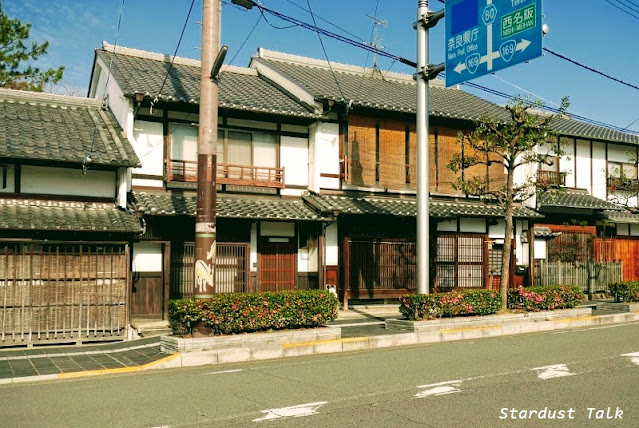
Nara-machi is the place where visitors can see and feel good, old Nara. Narrow streets have remained unchanged and many of the houses and businesses still reflect their original 18th century architecture with traditional design.  

Most of the photos are from my past walks before the pandemic.
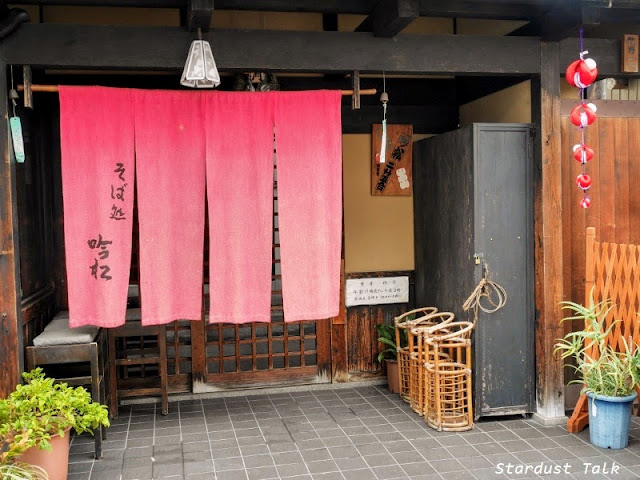
Soba, buckwheat noodle shop

Nara-machi has developed centering Gangoji Temple (World Heritage), which was moved to the current site from Asuka when capital was relocated to Nara in the 8th century. It has been through repeated ups ad downs in its long history. Much of Nara-machi was inside the grounds of Gango-ji during the temple's heyday. 

Nara-machi is a unique town of Koshin faith.  Monkeys made of red cloth are hung from the eaves of each house as substitute monkeys. They protect families inside from diseases and disasters. Red color is a lucky color to ward off evil spirits. The number of the red monkeys show how many people inside they protect.  In the ongoing outbreak of the new corona, I'd like to hang them on the eves of my house.

Drum is rung before praying.

Nara-machi features traditional wooden lattice doors and white washed houses with a mezzanine story.  The slate wooden lattice-work covering the window functions like modern blinds. People can maintain privacy while keeping eyes on the street outside.


Another feature is the structure’s narrow frontage and long depth. The reason for this long rectangular design is due to the land taxes assessed on the width of a house’s façade.

Several shops share the depth of the old structure

In Edo period (1603-1868), this place was the regional commercial center. Some old pictorial shop-name boards are preserved at the Naramachi Museum.

Sorry to see the Guardian God suffering from stomachache.
ULUUS (ウルユス) is mild laxative released in 1811, the first drug with non-Japanese name.

Nara-machi Nigiwai no Ie was built in 1917 and was renovated thoroughly for future generation. It was originally the house of a wealthy merchant.

Shimenawa, an ornament made with rice sticks, ferns, a mandarine and dried persimmons
 for the New Year, is hung at the entrance.

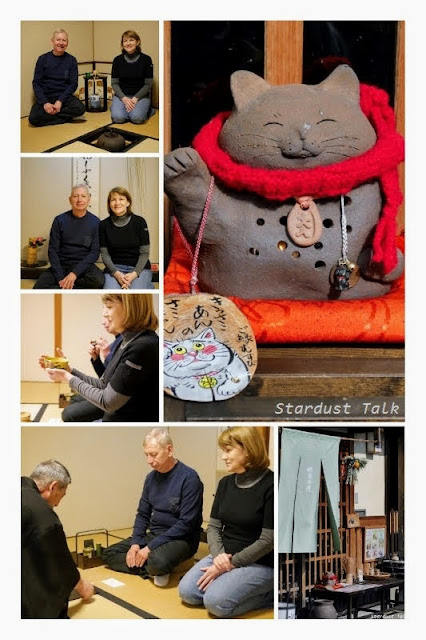
Adapting traditional buildings for a modern lifestyle and leaving a well-maintained old town for future generation is the way of preservation of this town.  When the city had a plan to widen the streets, it was townspeople to have decided to keep the old narrow ones. I've been amazed how people are good at cornering and parking with many turning back.  Some old structures are remodeled and repurposed  as history museums, handicraft shops, cafes or restaurants, and so on.  There is a place where a tea master holds Tea Ceremony only for you or your groups.

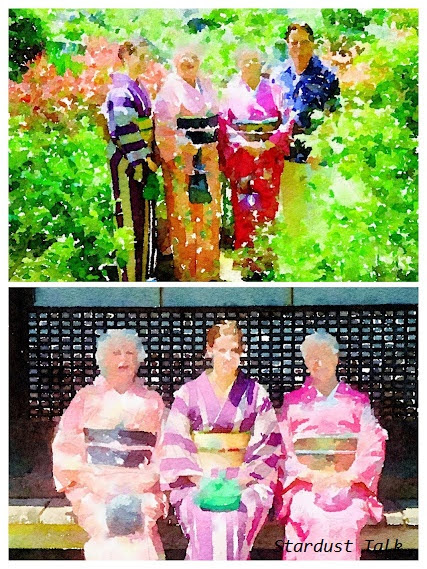
Irina from Russia, 2016. With her permission.

How about getting dressed in rental kimono for photography as well as 
exploring the area?

Tourists from Canada, 2008.

In this small laid-back town of tourism, there are so many to see and to do 
before or after exploring around Nara Park.

The road leading up to Nara Park area via Nara Hotel

I'm always a late starter in blogging as I enjoy the slow pace of the beginning of the New Year. I'll keep blogging slow but steady this year, too. Keep tuned!  

A Post about Gangoji in Nara-machi:  

Monday, May 3, 2021

Carp streamers to celebrate Children's Day


Koinobori Festa at Takatsuki City, Osaka Pref, 2015

The 5th of May is Chidlren's Day, a national holiday set in 1948,
 to celebrate healthy growth and happiness of all the children.
Koinobori, huge Carp-shaped windstocks, are flown customarily to celebrate Children's Day.
Originally the fifth day of the fifth month was Tango no Sekku, celebration for boys,
while the third day of the third month, Hina Matsuri (Dolls' Testival) for girls.


In April prior to the Children's Day, many houses with boys used to let the Carp Streamers 
 swim and dance in the air in my childhood.
Gradually they disappeared from urban areas without enough space for them not to tangle with utility wires.


"Between the overlapping waves of roof tiles and waves of clouds,
in Tachibana-citrus-scented morning breeze,
carp streamers are swimming high."
(Translation of the first stanza of children's song "Koinobori".)

When the song was released 1913, roofs were exclusively made of Japanese tiles
 which looked like waves or fish scales.


Carp upstreams the rapids with full of energy and power.
It stands for courage and determination to attain high goals by overcoming obstacles.
In a legend, when a carp swims up waterfalls, it becomes a dragon right away.

(On entering the site, you'll see "This video is not allowed to use in other website than YouTube."
perhaps in Japanese.
Click on the word Youtube to see directly at YouTube.)

Carp Streamers Festival has gotten popular nationwide year by year
utilizing many donated carp streamers which are not used at home.
The photos are from the Carp Streamers Festa held at the riverbank of the Akuta-gawa River, 
Takatsuki City, Osaka Pref, in 2015.
It features the carp streamers made by the kindergarteners of the city
in addition to the donated traditional ones.


At home, I displayed a set of Boy's Day Warrior Dolls for the first time in 7 years
since my grandson Y was 1-year-old.
The set was presented by my father for my son's first Boy's Festival.


Y turned 8 on the 1st of May.
He has grown experiencing wide range of different things.
He loves soccer and painting above all.
This sunny boy will explore the world with his bright-eyed curiosity.

At 4 - 6


Last but not least...., 
sadly not all children are happy.
In the peaceful stillness, in the flickering light through fresh verdure,
 I stood quiet humbled in awe in front of this Jizo, a Guardian of children 
including unborn babies and the children who died young.
He tries to help the weak with full of compassion and fortitude.
Wish all the children on this planet well-being.

At Chogaku-ji Temple, Tenri City


Linked to Mosaic Monday