Pages

Showing posts with label Awaji-shima Island. Show all posts

Monday, December 20, 2021

My favorite landscape of twelve places

I selected some landscape photos from my past travels in ten years for the last post this year.

January
(Click on the blog title to see more.)
Due to the relatively warm climate, white narcissus start to bloom mid-January
on a steep south slope of Mt. Yuzuruha.
Narsisuses at Nada-kuroiwa facing the Pacific, Awaji Island, Hyogo Pref.


February
"Robai", or Wintersweet, at the entrance to Yatsuri, Asuka Village, on a misty morning

March
Ume (Prunus Mume) blossoms, the floral harbinger of spring of Japan, 
brighten up the hillside from pale wintry landscape.
Tsukigase Ume Grove, Nara Pref.

April
Blooms of cherry blossoms tell full arrival of spring.
Kasugano Field in Nara Park

May
Crystal-clear water flows through moss-covered rocks from the beech forest of Mt. Daisen.
Kitanizawa mountain stream, Tottori Pref.

June
Floral symbol of the rainy season, "Ajisai" Hydrangeas, at Lake Yogo, Shiga Pref.


July
Star Festival decorations at Mt. Rokko, Hyogo Pref.


August
Olive farm facing Seto Inland Sea, Okayama Pref.


September
Five-storied Pagoda seen from Ara-ike Pond, Nara Park, Nara Pref.


October
Oide Suspension Bridge, Hakuba Village, Nagano Pref.


November
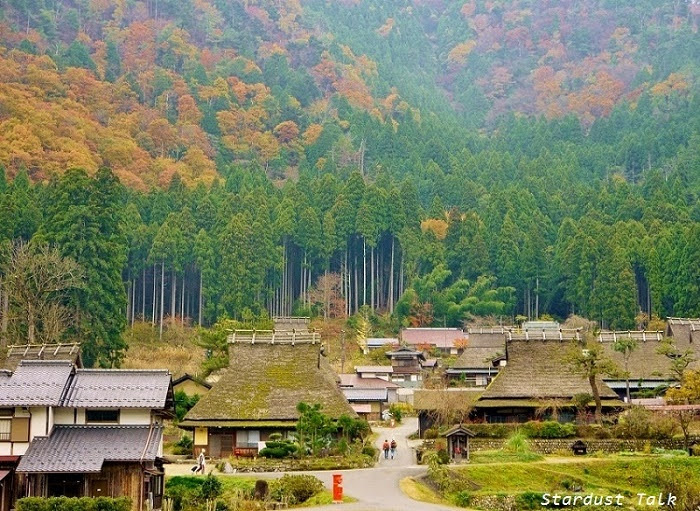
Thatched-roof village and Kitayama Cedars, Miyama Cho, Kyoto Pref.


Decemeber
Grand Front Osaka


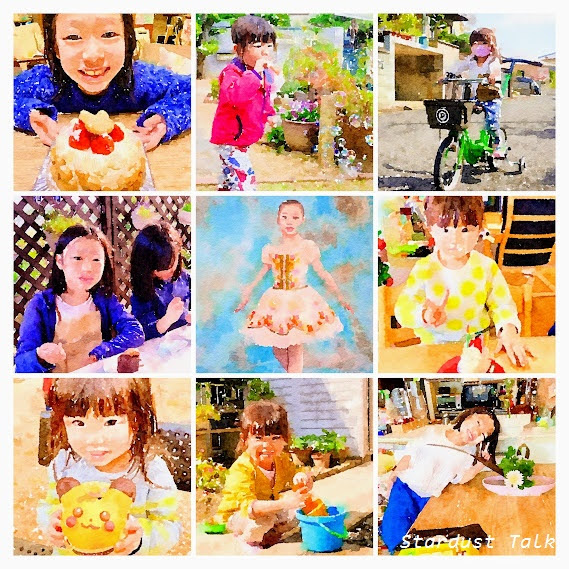
My eldest and youngest grandchildren, F and M, turned 11 and 4 early December.


The year 2021 is left only eleven days.
Many people are looking forward to going back parents' home in their hometown
over the years, which they had to give up last year-end.
I look forward to welcome back all my families.

Wish you the warmth of family getting together again
and a healthy, happy, and peaceful Holiday Season!

Monday, May 25, 2015

Living in an earthquake-prone country

About one month has passed since the latest powerful earthquake in Nepal. The scenes from Nepal look total devastation. It must be an unbelievably tough test of courage and perseverance for Nepalese. Nepal and its people are in my prayers and thoughts.
Great Hanshin Earthquake of 1995, Japan, of which epicenter was northern Awaji-shima Island showed how devastating when a powerful earthquake hit a large city.  Kobe people were totally unprepared believing big earthquake wouldn't strike Kobe.

Photos are from my latest overnight trip to Awaji-shima Island.
When my husband and I travel together, we tend to invite rain against weather forecast.
The layers of mountains and shore of Shikoku seen from the south of the island.


Source, here

Awaji-shima is linked with Tokushima Pref., Shikoku, by Onaruto Bridge

and is linked with Kobe by Akashi Ohashi Bridge, the world's longest suspension bridge.
Main industries are dairy farming  (dairy cattle and beef cow for Kobe Beef), growing flowers...

.... agriculture (rice, onions, lettuce, and other vegetables)...

... fisheries  (sea bream, abalone, turban shell, sand eel, wakame see weed, and “Torafugu”, a kind of globefish, farming)

.... tourism for Naruto Whirlpools, Awaji Puppet Theater Company, natural beauties, and many others.

Southern port of Fukura

Preserved Nojima Fault at Hokutan-cho Earthquake Memorial Park
 shows how the movement in the ground cuts across roads, hedges and other installations.


Many lessons were learned from the Great Hanshin Earthquake. A reassessment of the building regulations for both private residences and public offices as well as transport infrastructure were enforced. The newly built constructions are earthquake proof. The damages to newly constructed buildings would be slight thanks to the latest technology, massive shock absorber or another method which allows the base of a building to move semi-independently to its superstructure, reducing the shaking caused by quakes.  For those trapped, almost all the local governments have blankets and earthquake emergency kits, including dry rations, drinking water, basic medical supplies. At schools, children go through earthquake drills regularly. It’s much better than having air-raid drills, anyway.


It’s almost impossible to perfectly predict and avoid earthquakes but possible to minimize damages if you prepare well and are determined to protect yourself.  So, what will you do when you feel a big tremor?  Go head-first under the table or desk. Most of injuries are from falling objects. The first thing to do is to look to your own safety.  Stay calm and act steadily.


When you’re at home, try to turn off gas just after the quakes calm down. Don’t rush outdoors, but secure the exit in case.  A pair of slippers in the house is a help when you walk in the mess of the rooms.

When you have to go out, bring your emergency provisions with minimum belongings. Don’t use elevators. Pay attention to broken or dangling electric wires and be alert for aftershocks. Stay off from buildings and walls to avoid falling debris like roof tiles, signboards, or broken windowpanes.


These are what to do beforehand: Check your home and improve anti-earthquake measures: Apply plastic films to windowpanes and cupboards to keep broken glass from falling: Don’t place large pieces of furniture in bedrooms or evacuation route: Store emergency provisions such as food, bottled water, for at least a week as well as flashlights, portable radios, a first-aid kit, and so on.

Flowers flow like the Milky Way at Awaji Hanasajiki overlooking the sea and meadows.
Situated on the Pacific "Ring of Fire", Japan is one of the most seismically active nations. Deadly earthquakes have shuttered the community periodically since the ancient times. I’m not over-worried like many other Japanese people but can’t help but have quiet despair or feel resignation to the will of Nature. My heart aches and is warmed up at the same time to see the people who are fragile in the powerful force of nature but resolute with light within when immersed in the darkness.

Monday, May 2, 2011

Tulip Island Party 2011


At 国営明石海峡公園/Akashi Straits National Government Park, protagonist from the middle of March to April would be tulips of about 600,000 bulbs from 300 varieties.  


In any highly successful event there are always those who support it nicely: at the beginning of April, they are muscari, daffodils, other spring flowers, and greenery, though poplar trees had not started budding when I took these pictures.


Other than these tulip zones, there are natural gardens, forests, and waterfronts as well.   As I strolled around, I was excited what would be the next.   This park is interconnected with Awaji Yume-butai (Dream-stage).


Born in Kobe City, I grew up seeing Awaji-shima beyond the sea of Kobe, and I've gotten fascinated by this island since my first visit in February.  Getting off highway, driving winding country roads with ups and downs is quite relaxing.

The island was severely hit by the earthquake in 1995 and is thriving now inviting more people from Honshu (main land.)  As I often witness the recovery of Kobe and Awaji-shima, I surely believe in the resurrection from any calamity.  May Tohoku be revitalized on a new community planning strong against tsunami by overcoming overwhelming sadness and daunting difficulties in near future.


Other posts about flowering places in Awaji-shima Island: 
Pastoral Awaji Hana-sajiki  

Visit My World site to learn more about our World!

Monday, April 25, 2011

Awaji Hana-sajiki


At Awaji Hana-sajiki in Awaji-shima Island, kobe, the dream of spring unfolds with yellow rape blossoms, mauve murasaki-hanana, and linaria.  The flower fields stretch over rolling hills with vertical difference of 50-60 meters.  Under the sunlight, yellow flowers all turn into gold.


Yellow blossoms are common in the countryside of Japan.   They are “na-no-hana” in Japanese which do not always mean rape blossoms for seed oil but all the yellow flowers of mustard or cabage family like potherb mustard "mizuna."


"After the 1986 Chernobyl nuclear disaster, sunflowers and rape blossoms were used to decontaminate soil in Ukraine. Radioactive cesium is similar to kalium, a commonly used fertilizer. If kalium is not present, sunflowers will absorb cesium instead."  "......the researchers are considering using hyperthermophilic aerobic bacteria--used to produce compost--to decompose the plants. The decomposing process will reduce the sunflowers to about 1 percent of their previous volume, which will slash the amount of radioactive waste that needs to be dealt with."

Above is excerpts from Daily Yomiuri Online introduced by my English teacher.  I think it's a good idea to depend on nature's way when nature can make up for human blunders.

紫花菜,  murasaki-hanana,  orychophragmus violaceus


“Hana-sajiki” literally means "flower-first balcony of a theater": flowers are overlooking the sea like "sajiki" overlooking the stage, and flowers are viewed from higher "sajiki", observatory at the summit as well.  On a sunny day, Seto Inland Sea is clearly visible, but unfortuntately the sea was dim, very weakly shining due to typical spring haze in that direction on that day.   Can you see dim harbor in the distance?

 linaria


Poppies had just started blooming for the next stage.  Cows were grazing nearby, fresh breeze was blowing so softly against me...., I felt peace, free and comfortable.  Talking of "free", both admission and parking are free of charge.


Within 10 minutes’ drive, there is Nojima Danso Hozonkan (Fault Preservation Museum) in Hokudancho where was the epicenter of Great Hanshin Earthqukae (1995).   Dislocation caused by the Earthquake is preserved in the building.  In a simulator, visitors can experience the shaking of the same intensity and duration which hit the island.  Sudden very strong vertical jolt and then violent horizontal shaking for about 4 minutes was quite scary.  The museum staffs hope it will remain not as just a memorial of the past but as a constant reminder that people must stay prepared without fading memory.

Find your favorite place on "sajiki" and  relax!

Awaji-shima Island connected with Kobe City by Akashi Straits Bridge is full of beautiful nature.   For more posts related to Awaji-shima, click “Awaji-shima Island” in the “Labels.”

Visit My World to learn more about our world!

Monday, January 31, 2011

Narcissus Field at Nada-Kuroiwa in Awaji-shima Island

 
About five millions of wild narcissus grow on a steep slope of Mt. Yuzuruha , 608 meters high, in Awaji Island, Hyogo pref. 

Daffodils
William Wordsworth

I wandered lonely as a cloud
That floats on high o'er vales and hills,
When all at once I saw a crowd,
A host, of golden daffodils;
Beside the lake, beneath the trees,
Fluttering and dancing in the breeze.


Narcissus leaning closer to the water remind me of Narcissus in Greek mythology.


Clean and bright narcissus are swaying in the cold breeze.

Continuous as the stars that shine
And twinkle on the milky way,
They stretched in never-ending line
Along the margin of a bay:
Ten thousand saw I at a glance,
Tossing their heads in sprightly dance.
 
As the flowers go up the steep hill, sweet fragrance fills the air.

The waves beside them danced, but they
Out-did the sparkling leaves in glee;
A poet could not be but gay,
In such a jocund company!
I gazed—and gazed—but little thought
What wealth the show to me had brought:

The contrast of white and lemon yellow flowers and the blue sea. 
 I wonder whether they are yearning for unknown land beyond the sea or just facing the sun.

 For oft, when on my couch I lie
In vacant or in pensive mood,
They flash upon that inward eye
Which is the bliss of solitude;
And then my heart with pleasure fills,
And dances with the daffodils.


This year, start of narcissus blooming was delayed two weeks due to record  low temperature.  They will continue blooming till the end of February one after another.
Facing the Pacific Ocean, the weather of southern Awaji island is one of the mildest in Japan and spring comes earlier.


Visit the MyWorld site to see more about our world.