Pages

Showing posts with label Heijyo Palace Site. Show all posts

Monday, October 11, 2021

At the Heijyo Palace Site


It has been like summer days these weeks, too warm with the temperature topping 
32 degrees C despite the early arrival of cool air one month ago.
July, 2021, was the world's hottest month on record.
I wonder how would be October?


I walked around the Heijyo Palace Site last week.
As is introduced in my post Moody weather at Heijyo Palace Site (October, 2014),
the remains of the ancient capital of Japan is a vast fields of wild grasses.
Japanese pampas grasses, ragweeds, reeds and other grasses wave in the breeze.
There are a brook and ditches I'd like to look for reflections.


The sky of the site is as spacious as the eye can reach.
In November, 2016, Blue Impulse, an aerobatic demonstration team of 
Japan Air Self-Defense Force,  flew in the skies of the old palace site.
The flight was one of the events to celebrate and commemorate the 60th year of 
the opening of the Nara Air Base.


Blue Impulse was founded in 1960.
At the opening ceremony of the Summer Tokyo Olympics, 1964,
the team performed drawing five Olympic rings with colored smoke in the sky.
The most recent performance was on the previous day of the Tokyo Olympics, 2021,
following the last year's flying over Tokyo to thank medical care workers
for their tireless efforts to fight against COVID-19.
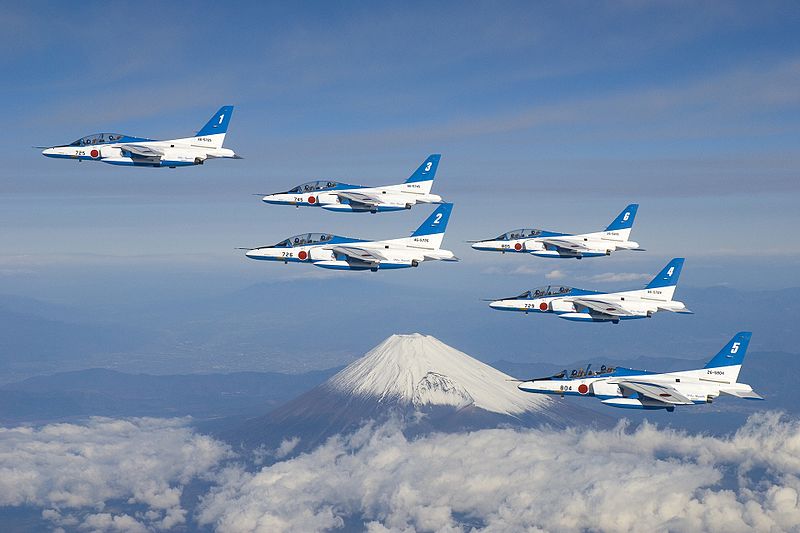
Blue Impulse and Mt. Fuji from this Website


About one and a half hours before the sunset,
the sky was aglow rose and Japanese pampas grasses were shining.


Shukuro Manabe's Nobel Prize is seen heightened sense of crisis over climate change together with the successive intense abnormal weather worldwide.   His prediction about the future of our home Earth was made half a century ago.  The world cooperative works against the climate change looked starting years later in 1988, but have been disrupted because of the long raged controversy on whether global warming is real and whether human activities are causing the phenomenon.

Using Manabe's method, a certain abnormal climatic incident in decades can be proved that it wasn't happened without climate change. Regarding the long-term prediction, it is easy to cause skepticism with short words in people's mind even for the theory based on scientific data. On the contrary, it requires long time (with more and more evidence in the process of discovery) and elaborate explanation to prove it real.  Anyway, we lost about 30 years to tackle this issue.  It's good for the world to cooperate at last, but the sudden drastic change of policy in short term could cause energy shortage and other type of environmental destruction by random development for alternative energy.  Keep my fingers crossed for the better future guided by the wise policies improving one by one.

Today it's still hot here, 30 degrees C, but is forecasted to become autumnal in a couple of days.

Linked to Mosaic Monday

Friday, October 17, 2014

Moody weather at Heijyo Palace Site

Heijyo Palace Site is the place where Heijyokyo, the ancient capital of Nara, was located about 1300 years ago.  After archaeological research was over, some of the excavated remains were returned to the underground to ensure their conservation while some others are exhibited at the Heijyo Palace Museum. Now it is a vast wild grass field with three reconstructed structures including 朱雀門 Suzaku-mon Gate, 東院庭園To-in Garden, and 大極殿 Daigokuden, which stand far apart from each other in the spacious field.
 
I walked around the old palace site free and comfortable last week,
feeling the cool and crisp air and listening to the chorus of the insects.
 
Daigokuden, or Audience Hall


Under the field of vast wild grasses, all that remains is ancient dreams.
 
North-east


South-east


I came across a big fallen tree tangled by the broken branches of other tree.
I don't know when and why this tree fell down....maybe because of the typhoon No. 18?
(I went there before the typhoon No. 19.)
When I passed by this tree in April, it was standing tall and proud.


In the ditch

The weather got unnerving rapidly.


It got darker and darker with louder sound of wind.
The moment I thought it was going to rain, it started raining.
I put my camera in the backpack and sheltered myself by a small collapsible parasol.


However, the weather never stays the same for long.
The rain was short-lived and when I was leaving the old palace site, the Audience Hall was
enveloped in the rosy glow of the evening.


- A little more about the Heijyo Palace Site -

Nara was the capital of Japan from 710 to 784. When the capital was moved from Nara to the new capital in 784, large part of the city was abandoned and the major buildings were dismantled and transferred to the new place. Gradually being used as rice paddies, the ancient Nara Palace lay quietly under the rice paddies for more than 1200 years. It was 1852 when a local official realized that the footpaths of the square rice paddies were traces of the 8th century grid system of the ancient capital. Years long later in 1963, the government realized at last the historic value of the site and bought the rice paddies from the farmers. Today almost all the site is owned by the national government and is preserved as a Special National Historic Site. It was designated as World Heritage Site in 1998.

Three major structures of the former palace complex were restored according to the information gathered from excavation research so that they would look as close as possible to the originals. The construction was based on old methods, composed of several different pieces of timber without the use of nails or metal. However because of earthquake resistance according to the new building standard codes, some metal bolts and cramps were used and concrete for the base. As an additional reinforcement, the foundation platform has a base-isolated structure, which is a contemporary technique used as an earthquake-proof measure. Daigokuden, Audience Hall, was reconstructed on the occasion of the 1300th anniversary of Nara Capital and opened to the public in April, 2010.

Major temples like Todai-ji and Kofuku-ji on the hills in the outskirts of the palace site lasted long and Nara has survived as a religious and resort site.

By the way, this is one of the most glorious skies  right after the sunset in October so far.  I took this photo from the western tip of the hill where my residential area is located. The sun set behind the Ikoma Mountains, border of Nara and Osaka.


This post is linked to Friday My Town Shoot Out.
Thank you, Mersad, for hosting.