Pages

Showing posts with label Nara-machi. Show all posts

Monday, January 17, 2022

A town, quaint and nostalgic

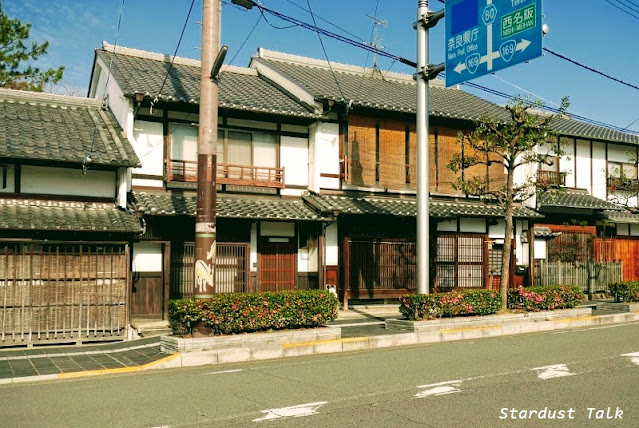
Nara-machi is the place where visitors can see and feel good, old Nara. Narrow streets have remained unchanged and many of the houses and businesses still reflect their original 18th century architecture with traditional design.  

Most of the photos are from my past walks before the pandemic.
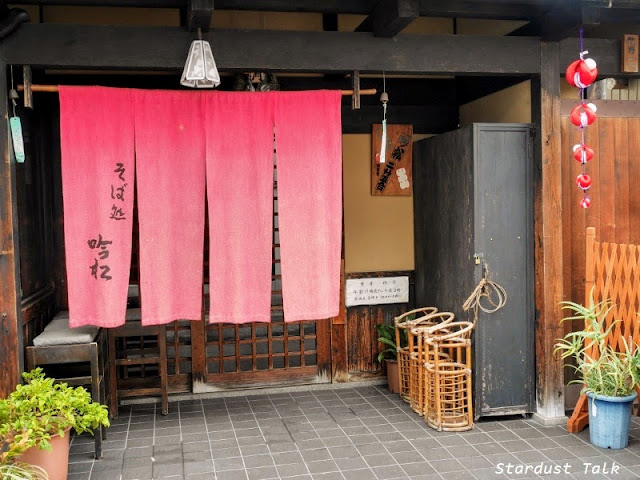
Soba, buckwheat noodle shop

Nara-machi has developed centering Gangoji Temple (World Heritage), which was moved to the current site from Asuka when capital was relocated to Nara in the 8th century. It has been through repeated ups ad downs in its long history. Much of Nara-machi was inside the grounds of Gango-ji during the temple's heyday. 

Nara-machi is a unique town of Koshin faith.  Monkeys made of red cloth are hung from the eaves of each house as substitute monkeys. They protect families inside from diseases and disasters. Red color is a lucky color to ward off evil spirits. The number of the red monkeys show how many people inside they protect.  In the ongoing outbreak of the new corona, I'd like to hang them on the eves of my house.

Drum is rung before praying.

Nara-machi features traditional wooden lattice doors and white washed houses with a mezzanine story.  The slate wooden lattice-work covering the window functions like modern blinds. People can maintain privacy while keeping eyes on the street outside.


Another feature is the structure’s narrow frontage and long depth. The reason for this long rectangular design is due to the land taxes assessed on the width of a house’s façade.

Several shops share the depth of the old structure

In Edo period (1603-1868), this place was the regional commercial center. Some old pictorial shop-name boards are preserved at the Naramachi Museum.

Sorry to see the Guardian God suffering from stomachache.
ULUUS (ウルユス) is mild laxative released in 1811, the first drug with non-Japanese name.

Nara-machi Nigiwai no Ie was built in 1917 and was renovated thoroughly for future generation. It was originally the house of a wealthy merchant.

Shimenawa, an ornament made with rice sticks, ferns, a mandarine and dried persimmons
 for the New Year, is hung at the entrance.

Adapting traditional buildings for a modern lifestyle and leaving a well-maintained old town for future generation is the way of preservation of this town.  When the city had a plan to widen the streets, it was townspeople to have decided to keep the old narrow ones. I've been amazed how people are good at cornering and parking with many turning back.  Some old structures are remodeled and repurposed  as history museums, handicraft shops, cafes or restaurants, and so on.  There is a place where a tea master holds Tea Ceremony only for you or your groups.
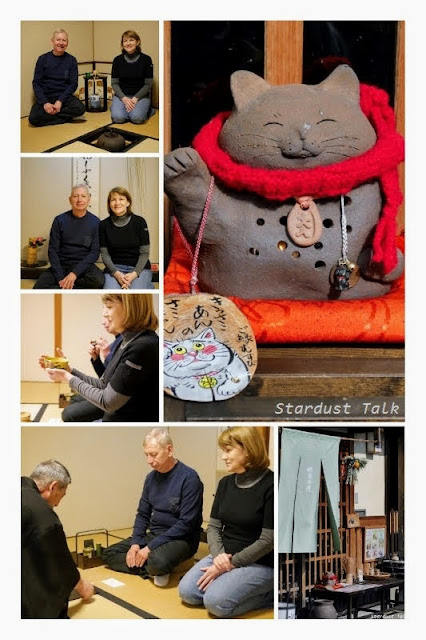
Irina from Russia, 2016. With her permission.

How about getting dressed in rental kimono for photography as well as 
exploring the area?
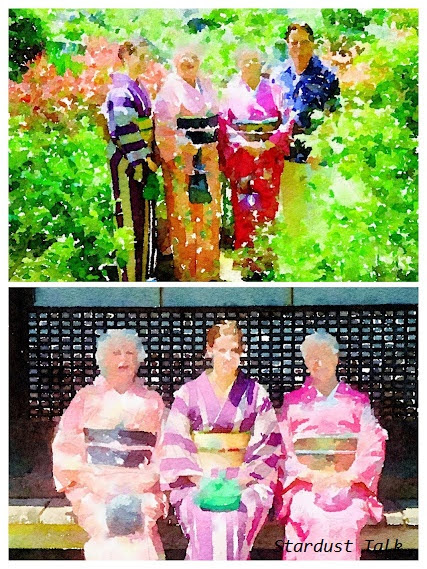
Tourists from Canada, 2008.

In this small laid-back town of tourism, there are so many to see and to do 
before or after exploring around Nara Park.
The road leading up to Nara Park area via Nara Hotel

I'm always a late starter in blogging as I enjoy the slow pace of the beginning of the New Year. I'll keep blogging slow but steady this year, too. Keep tuned!  

A Post about Gangoji in Nara-machi:  

Monday, February 3, 2020

The color red to ward off evil spirits

Nara-machi Museum

Nara-machi, a quaint, nostalgic, and charming town close to Nara Park, 
is a town of Koshin faith.  
Monkeys made of red cloth are hanged from the eaves of each house 
as substitute monkeys for protecting families inside from diseases and disasters. 
Since the ancient times, red color is believed to be a lucky color to ward off evil spirits. 
The number of the red monkeys show how many people inside they protect.  

An old townhouse, renovated and re-purposed into a gallery cafe

Apart from the scapegoat monkeys.....,
red is eye-catching.
Kafka in Nara-machi?  


I like it when red color is used as an accent.
I chose some unpublished photos in which red spices up the landscape.


The town was getting busier toward the holiday season.


Kobe-ohashi Bridge connecting downtown Kobe and man-made Port Island


So many countries have stepped up fight against the epidemic of the novel coronavirus.
Knowing the fact that about 10000 people dying of influenza in Japan,
I have to be more cautious as unknown disease is frightening. 
But what I've been doing is my habitual preventive measures
when flu and colds are going around.
Personally, flu and noro-virus are more threats in reality so far.
In addition to what is written at Healthy Habits to Help Prevent Flu,
I keep handy packs of alcohol-based sterilized cotton in my bag 
in case soap and water are not available.
Inside the house, I use humidifying air cleaner.
About 50% humidity is thought to make viruses much less active.
More importantly, enough sleep, balanced diet, and exercises
would be necessary not to lower one's immunity.

The first torii gate to the Kasuga Grand Shrine
This photo was published in A snow day in Nara Park, 2011.
No snow yet in this winter.

Be safe and take care of yourself, everybody worldwide.

Linked to Mosaic Monday

Tuesday, September 30, 2014

The hue of autumn at Gango-ji Temple


September is going to end. Gradual cooling, cool and crisp air, sound of wind, blooms of autumn flowers, turning colors of grasses and leaves make me realize autumn is come.  At Gango-ji Temple in Nara City, The flower of Japanese bush clover is a sign of autumn together with the blooms of Chinese bellflowers and Japanese cluster-amaryllis.


Japanese bush clover, “, Hagi" meaning literally “grass on top of 秋, autumn", would be the first autumn flower because they start flowering when summer heat still lingers.  Tiny reddish purple or pink flowers and dainty leaves sway in breeze on arching stems. They were the most loved autumn flowers since the ancient times.  In the Manyoshu Anthology compiled in the 8th century, hagi flower is the most written flower, 142 out of 4500 poems.


There is also a white-flowered variety.


They play around some of the rocks with another autumn flowers, bluish purple bellflowers. 


This another stone was a foundation stone to the Lecture Hall.

 
In the precinct, there are about 2500 pagodas and statues made of stone or engraved on stone. They were donated by the people to wish for peaceful death to go to the Pure Land of Buddha in the medieval period.


Higanbana, or Japanese cluster amaryllis, starts blooming around the autumn equinox.


Asuka Temple built in Asuka in 596 is Japan's oldest Buddhist Temple. When the capital was transferred to Nara, the temple was moved to the current site (Nara City) and renamed Gango-ji in 718. Traits from the ancient times you can see from outside is the beautiful roof tiles and the design of roofing.

West roof of the Main Hall
Japan's oldest tile roofing called "Gyoki-buki" is constructed by partially overwrapping roof tiles of folding-fan shape.  "Gyoki-buki" is seen on the west roof of the Main Hall (Gokuraku-bo or Paradise Hall) and 16 rows of the roof of Zen Meditation Hall back to the Main Hall.  The roofing design is unique to Tempyo period (710-784).  Can you see color difference of the tiles on the roof of long rectangular building in the photo below? 

Main Hall and Zen Meditation Hall, both are national treasures.


Left side was roofed in Kamakura period (1192-1333); right side is "Gyoki-buki" in Nara period (710-794).


A few of the remaining tiles, which are brownish color, are from the Asuka period (593-670).  They were made by Korean craftsman and are the very first tiles produced in Japan.  In the ancient times, building materials were often collected from dismantled buildings, then carried to new sites and reused to make new buildings. 


Ancient tiles made in the 6th century have gone through more than 1400 times of seasonal change from summer to autumn at this temple. 

Seasonal flower is often arranged at the tsukubai basin at this temple.
Gango-ji Temple is registered as World Heritage Site as part of Historic Monuments of the Ancient Nara together with Todai-ji Temple, Kofuku-ji Temple, Kasuga Shrine, Yakushi-ji Temple, Toshoda-ji Temple, Kasuga Primitive Forest, and Heyjyo Palace Site.
This post is linked to Our World.